Equipment Lease vs Buy: Which Is Better?
When deciding whether to lease or buy equipment for your business in Canada, the choice hinges on cash flow, financial benefits, and how long you’ll use the equipment. Leasing spreads costs over time, requires little upfront investment, fixed payments, and offers flexibility for rapidly changing tools, but it can sometimes cost more in the long […]
, July 10, 2025
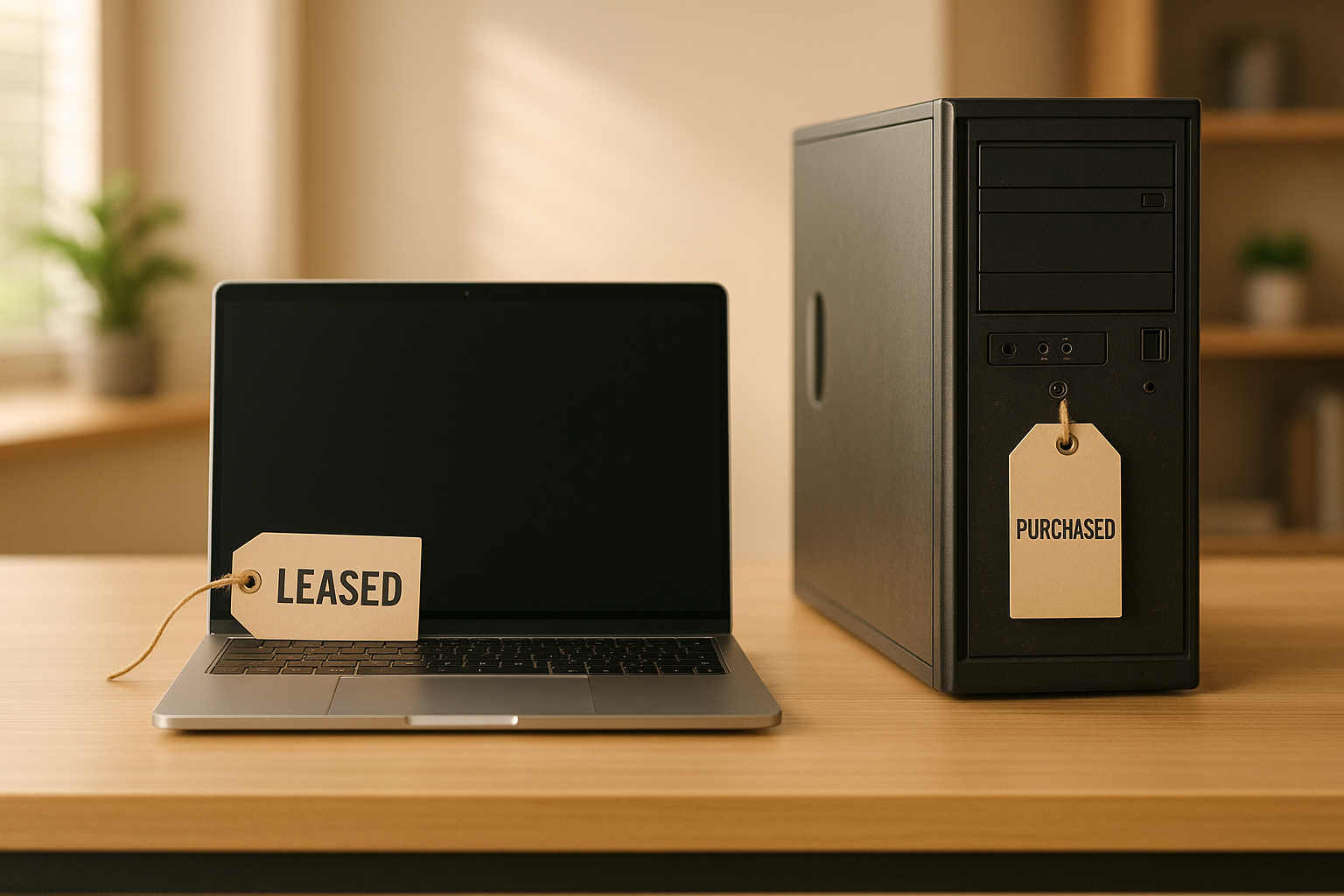
When deciding whether to lease or buy equipment for your business in Canada, the choice hinges on cash flow, financial benefits, and how long you’ll use the equipment. Leasing spreads costs over time, requires little upfront investment, fixed payments, and offers flexibility for rapidly changing tools, but it can sometimes cost more in the long run. Buying demands a larger initial outlay but often saves money over time, builds equity, and provides tax benefits through depreciation.
Key Points:
- Leasing: Lower upfront cost, predictable payments, potential maintenance coverage, easier approval process, but may have a higher total cost over time.
- Buying: Higher upfront investment, ownership benefits, and potential long-term savings, but full responsibility for maintenance and repairs.
Quick Comparison:
| Factor | Leasing | Buying |
|---|---|---|
| Upfront Cost | Low or none | High |
| Monthly Payments | Fixed lease payments | None (if paid in cash); loan payments if financed |
| Ownership | at end of term | Yes |
| Maintenance | Sometimes included | Your responsibility |
| Flexibility | Upgrade options at lease end or during term | Long-term use, resale value |
| Cost Over Time | Higher due to interest and fees | Lower if equipment is used for years and paid in cash |
Your decision depends on your financial situation, industry needs, and the expected lifespan of the equipment. Leasing suits businesses with limited capital or rapidly evolving needs, while buying benefits those with stable cash flow and long-term usage plans. Also, if equipment is leased vs. bank financed, it can be a much quicker process with an dedicated equipment finance company then the bank but interest rates will be marginally higher then the bank which holds a bundle of your products, services and personal guarantees as collateral.
Leasing vs. Buying a Truck in your Corporation – Canadian Tax Tips!
Main Differences Between Leasing and Buying Equipment
Understanding the differences between leasing and buying equipment can help Canadian small businesses align their decisions with financial and operational goals. Below, we break down each method and how it affects cash flow.
What Is Equipment Leasing?
Leasing equipment means you’re essentially “renting” it instead of purchasing it outright. You make regular payments – monthly or quarterly – to a leasing company for the right to use the equipment over a specific term, which can range from a few years to several.
At the end of the lease, you usually have three options: purchase the equipment at its residual value, renew the lease, or return the equipment. This flexibility is especially helpful for businesses that need to keep up with rapidly changing technology or prefer predictable expenses. Jocova Financial focuses on capital leases were there is usually a nominal lease buyout (i.e. $100) and the equipment ownership is transferred to the customer.
Since the leasing company owns the equipment during the lease, they often may be able to such services as insurance or bundle a supplier maintenance package into the leasing contract, depending on the agreement. This can ease the administrative workload for your business.
What Is Equipment Buying?
Buying equipment, on the other hand, means you either pay for it upfront or finance it to eventually own it. This requires a significant initial investment, either in cash or through financing options. Once purchased, you own the equipment and are responsible for all maintenance, repairs, and eventual disposal.
Ownership gives you the freedom to customize the equipment to meet your business’s unique needs. You also have the option to sell it when it’s no longer required. In Canada, financing options for equipment purchases include traditional bank loans, dealer financing, and lines of credit. These typically involve a down payment and structured repayment terms over several years. The bank process can also be more cumbersome then leasing so timeline is important to understand.
Effects on Cash Flow and Balance Sheets
Leasing and buying have distinct impacts on your cash flow and balance sheet.
Leasing allows you to spread costs over time with regular payments, which helps preserve cash for other business priorities. Lease payments are usually classified as operating expenses, making it easier to budget without a hefty upfront cost but please review with your accountant for tax treatment as this can change.
Buying, however, requires a large initial outlay, which can immediately impact your cash reserves. For instance, a significant purchase might reduce your ability to handle unexpected expenses or invest in growth opportunities. On the balance sheet, the equipment is recorded as an asset, while any financing creates corresponding liabilities.
In short, leasing helps conserve cash by spreading costs, while buying ties up capital and adds liabilities. These differences also influence tax strategies and overall costs, which will be explored further in the next section.
Cost Analysis: Which Option Costs Less?
The total cost of acquiring equipment depends on factors like your credit profile, the type of equipment, and how long you plan to use it.
Leasing Costs
Leasing typically involves monthly payments based on the equipment’s value and interest, spread over two to seven years. For leases under $100,000, rates usually fall between 6% and 12% if you have good credit, term selected and amount. Generally, the more the asset costs and the longer the term, the less interest rate will become.
Leasing requires little to no down payment, which helps preserve your working capital. For example, leasing $90,000 worth of equipment over five years at an 8% interest rate would result in monthly payments of about $1,825. At the end of the lease, you often have options: purchase the equipment (i.e. $100 buyout), renew the lease, or return it. The Canadian equipment leasing market is valued at $38.5 billion.
Buying Costs
Purchasing equipment requires a larger upfront investment, whether paid in cash or through financing. Financing adds loan interest, which varies based on your credit. For major purchases, interest rates typically range from 5% to 10%, affecting your monthly expenses.
Beyond the purchase price and interest, there are other costs to consider, such as transportation, installation, maintenance, training, and potential downtime or malfunctions. However, purchased equipment becomes an asset on your balance sheet and may retain some resale value, even though it will depreciate over time.
To make things clearer, here’s a comparison of leasing and buying:
Cost Comparison Table: Leasing vs Buying
| Cost Factor | Equipment Leasing | Equipment Purchasing |
|---|---|---|
| Upfront Investment | Low or no down payment | High upfront cost or financing |
| Monthly Payments | Fixed payments (e.g., ~$1,825/month on $90,000) | None if paid in cash; loan payments if financed |
| Interest Rates | 6%–12%, depending on credit | Typically 5%–10.% based on financing terms |
| Maintenance Costs | Could be included in the lease agreement | Responsibility of the business |
| End-of-Term Options | Purchase, renew, or return the equipment | No end-of-term costs, but asset depreciates |
| Total Cost Over 5 Years | Higher due to ongoing lease payments and interest | Lower if equipment is kept for a long time and paid cash |
Choosing between leasing and buying depends on your cash flow needs and how long you plan to use the equipment. Leasing helps with predictable payments and keeps more cash on hand, while buying might save money in the long run if you plan to keep the equipment for several years. Keep in mind that lease rates in Canada are often negotiable, so it’s worth shopping around and improving your credit profile before committing.
Tax Rules for Canadian Small Businesses
The Canada Revenue Agency (CRA) has specific rules for leasing and buying equipment that directly influence your tax obligations and cash flow. These rules play a crucial role in shaping your tax strategy and evaluating overall costs. Check the link and with your accountant when you are looking at acquiring equipment and what works best for your business and the CRA for accounting purposes.
Pros and Cons of Leasing vs Buying Equipment
When deciding between leasing and buying equipment, it’s essential to weigh the operational benefits and drawbacks of each option. Both approaches have unique advantages and challenges that can influence your business operations, financial health, and long-term strategy.
Leasing: Advantages and Disadvantages
Leasing equipment offers several benefits, especially for small businesses in Canada. One of the biggest perks is the low upfront cost, which helps preserve cash flow for other essential expenses and easy process.
Leasing also provides flexibility when it comes to upgrading technology. At the end of a lease term, you can easily switch to newer, more advanced equipment without dealing with the hassle of selling or discarding outdated items. This is particularly useful in industries where technology evolves quickly.
Another advantage is that repair and maintenance responsibilities may be able to be placed into the contract, reducing risks for your business. Additionally, leasing could have favourable tax treatments for your business so ensure you review with your accountant.
However, leasing isn’t without its downsides. Over time, leasing can cost more than buying the equipment outright due to interest and fees. For instance, leasing a $4,000 computer for three years at $40/month per $1,000 totals $5,760, far exceeding the original purchase price. Leasing also comes with restrictions on equipment use, and since you don’t own the equipment, there’s no opportunity to build equity or resale value until the end of term.
Buying: Advantages and Disadvantages
Purchasing equipment has its own set of benefits. The most obvious is ownership, which gives you full control over how the equipment is used, altered, or maintained.
Another major advantage is the potential for long-term savings. While the initial cost of buying equipment is higher, you avoid ongoing lease payments and interest charges, making it a more economical choice for assets with a long lifespan.
Ownership also offers tax benefits through depreciation. Please review with your accountant.
On the flip side, buying requires a significant upfront investment, which could strain your cash flow and limit funds for other business needs. There’s also the risk of obsolescence – equipment can quickly lose its value as newer models become available. Plus, as the owner, you’re fully responsible for all maintenance and repair costs. If you are planning on using a bank loan to buy, the process could also take weeks instead of hours which means in case of a breakdown or you need equipment right away for a job; timeline becomes a factor.
Pros and Cons Comparison Table
| Aspect | Equipment Leasing | Equipment Purchasing |
|---|---|---|
| Upfront Costs | Low monthly payments to conserve cash flow | High initial investment required |
| Long-term Costs | Higher due to interest and fees | Lower over the equipment’s lifespan |
| Ownership | No ownership or equity until end of term | Full ownership with potential resale value any time. |
| Flexibility | Easy to upgrade to newer technology | Complete control over usage and changes |
| Maintenance | Can be covered by leasing contract | Entirely your responsibility |
| Tax Benefits | Discuss with accountant | Discuss with accountant |
| Technology Risk | Minimal obsolescence risk | Equipment may become outdated |
| Cash Flow Impact | Predictable monthly costs | Large upfront cost, fewer ongoing expenses |
How to Choose Based on Your Business Needs
Deciding whether to lease or buy equipment depends on your industry, growth plans, and financial situation. Here’s how these factors can guide your choice.
Why Choose Jocova Financial
Small businesses in Canada often require flexible financing solutions, and that’s where Jocova Financial steps in. They provide customized payment plans designed to fit your cash flow and business goals.
Jocova Financial offers financing for both new and used equipment, covering everything from heavy machinery to cutting-edge technology. Their leasing programs feature competitive rates and terms that help you preserve working capital. This is particularly helpful for businesses looking to avoid large upfront costs.
If purchasing is a better fit for your business, Jocova Financial’s equipment financing options provide the capital you need without draining your cash reserves. Ownership comes with advantages like depreciation deductions, and their manageable monthly payment plans help maintain healthy cash flow.
For even more options, Jocova Financial works with dealers and manufacturers to offer financing programs that often include better rates and terms than traditional bank loans. With a strong understanding of Canadian business regulations and tax rules, they can help you structure financing to maximize benefits.
To figure out the best option for your business, it’s always a good idea to consult with your financial and tax advisors. Jocova Financial is there to help you make the choice that works best for your unique needs.
Making the Right Choice for Your Business
Deciding whether to lease or buy equipment boils down to understanding your business’s specific needs and aligning the choice with your financial objectives. Start by assessing how the equipment fits into your broader business strategy and how it can improve efficiency.
Your cash flow is a critical factor in this decision. If your cash flow is strong, buying equipment may be the better option since it often costs less over the asset’s lifetime. On the other hand, if cash flow is tight or unpredictable, leasing could be a smarter move. Leasing avoids a hefty upfront payment and spreads expenses into manageable monthly instalments.
“In most cases, it’s cheaper to buy up front than leasing to own. But if you’re in an unstable or fast-growing business, leasing may put less strain on your cash flow.”
Next, think about your ability to handle ongoing responsibilities like maintenance, repairs, upgrades, and training. If your team is prepared to manage these, ownership might be the way to go. If not, leasing – especially with maintenance services included – can be a more practical option.
The pace of technological change in your industry is another key consideration. If the equipment you’re looking at becomes outdated quickly, leasing offers the flexibility to upgrade regularly. For machinery with a longer useful life, purchasing can provide better returns and build asset value over time.
Once you’ve clarified your priorities, it’s time to compare your options. Look at purchase prices, down payments, lease terms, end-of-lease purchase costs, tax implications, insurance, financing options, and ongoing maintenance expenses. Don’t overlook used or refurbished equipment, as these can offer substantial savings.
To make an informed choice, consult professionals like your accountant, banker, or insurance provider. They can help you understand the financial impact of each option and structure financing to maximize tax benefits while aligning with your long-term goals.
Jocova Financial specializes in helping Canadian small businesses navigate these decisions. Their equipment financing programs are designed to preserve working capital while offering competitive rates and flexible terms. Whether you choose to lease or buy, Jocova Financial provides tailored solutions to help you acquire the tools you need for growth.
Ultimately, the decision comes down to integrating all costs into your cash flow projections. Factor in both the expenses and the potential revenue or savings the equipment will generate. This thorough analysis will help you determine which option truly aligns with your business’s goals.
FAQs
What should small businesses consider when choosing to lease or buy equipment?
When deciding whether to lease or buy equipment, small businesses need to weigh their cash flow, budget, and operational requirements. Leasing can be a great option for businesses with limited upfront funds since it usually requires lower initial costs and offers predictable monthly payments. On the flip side, buying equipment might save money over time, especially when it comes to assets that have a long lifespan.
You’ll also want to think about the expected lifespan of the equipment, how often upgrades will be needed, and the tax implications. Leasing can offer flexibility and may come with tax benefits, while buying gives you full ownership and could lead to long-term savings. Ultimately, aligning your choice with your business’s growth plans and financial objectives will help you decide which route best supports your operations.
How does the speed of technological advancements affect whether you should lease or buy equipment?
The pace at which technology evolves in your industry is a major factor when deciding whether to lease or buy equipment. In industries where tools and machinery quickly become outdated, leasing often stands out as the smarter option. It gives you the flexibility to upgrade regularly, so you’re always equipped with the latest technology – without the hassle of dealing with resale or disposal.
However, if technological changes in your field are more gradual, buying equipment could be the more economical choice. Ownership can lead to long-term savings, especially when the equipment stays relevant for years. Weigh your business’s operational needs against the speed of technological progress in your industry to determine the most practical path forward.
Other Posts