How Equipment Financing Helps Scale Small Businesses

Small businesses across Canada often face a tough challenge: acquiring essential equipment without draining their cash reserves. Equipment financing offers a practical solution by allowing businesses to spread the cost over manageable payments instead of paying upfront. This approach helps maintain cash flow, access modern tools quickly, and even unlock tax benefits. Key takeaways: Preserve […]
, October 7, 2025
Small businesses across Canada often face a tough challenge: acquiring essential equipment without draining their cash reserves. Equipment financing offers a practical solution by allowing businesses to spread the cost over manageable payments instead of paying upfront. This approach helps maintain cash flow, access modern tools quickly, and even unlock tax benefits.
Key takeaways:
- Preserve Cash Flow: Spread payments over time instead of making a large upfront purchase.
- Stay Competitive: Upgrade to the latest equipment to meet market demands.
- Simple Process: Equipment financing is a simple and quick process compared to traditional banks.
- Flexible Terms: Payment schedules can align with seasonal or fluctuating income.
Whether you’re running a bakery, construction company, or seasonal business, equipment financing can help you grow without putting pressure on your finances.
Unlocking Growth Through Equipment Financing
Main Benefits of Equipment Financing for Business Growth
Equipment financing plays a key role in helping businesses grow and stay competitive. Beyond simply acquiring tools and machinery, it opens doors to strategic growth and better financial planning.
Keep Cash Flow and Working Capital Available
One of the biggest advantages of equipment financing is that it helps preserve your cash reserves. Instead of making a large, upfront payment, financing allows you to spread the cost over time. This means you can keep funds available for other critical needs like payroll, inventory, or unforeseen expenses.
Take, for example, a landscape company in Vancouver needing commercial mowers and trailers. Paying for the entire setup outright would significantly impact their cash flow. Financing, on the other hand, breaks the expense into manageable monthly payments, leaving room for daily operations and unexpected costs. This flexibility is particularly useful during uncertain economic times or seasonal slowdowns, ensuring businesses can adapt quickly and maintain liquidity.
Get Modern and Specialized Equipment Fast
Staying up to date with the latest equipment is essential for business success. Equipment financing allows companies to access cutting-edge tools without waiting to save up. For instance, manufacturers can quickly acquire advanced CNC machines, 3D printers, or automated systems that boost production efficiency and quality – often with approval in as little as the same business day.
This speed is crucial for responding to market demands. Consider a printing company that lands a large contract. Financing lets them secure the necessary specialized equipment right away, enabling them to meet new demands without delay, unlike saving for a purchase which could take months or even years.
Flexible Payment Terms and Tax Advantages
Financing also offers flexibility tailored to your business’s cash flow. Payment plans can be customized, making them especially useful for seasonal businesses that experience fluctuating revenue. Payment schedules can align with peak earning periods, reducing financial strain during slower months.
From a tax perspective, equipment financing has its perks. According to the Canada Revenue Agency, lease payments are fully deductible as operating expenses annually. This differs from equipment loans, where only the interest portion is deductible. Additionally, instead of paying GST, HST, or PST upfront on a large purchase, financing spreads these taxes across smaller monthly payments. Businesses can also claim Input Tax Credits (ITCs) for the sales tax paid on lease payments each year, ensuring taxes are proportional to the equipment’s usage period (Please verify and check this information with current CRA regulations and your accountant – this is not tax advice)
Equipment Financing vs. Buying Equipment Outright
It’s important to weigh the pros and cons of financing versus purchasing outright to decide what’s best for your business’s needs and goals.
The decision between financing and purchasing depends on your business’s cash flow, tax considerations, and growth strategy. Consulting with a tax advisor can help you determine which option aligns best with your financial goals.
How Equipment Financing Supports Business Growth
Increase Capacity to Handle More Customers
Expanding your capacity to serve more customers is a direct way to drive business growth, and equipment financing can be a game-changer in making that happen. When your current resources can’t keep up with rising demand, financing offers a practical solution. Take, for instance, a manufacturing company that secures a major new contract. By financing additional machinery, they can ramp up production right away. This approach allows them to meet the increased demand and seize growth opportunities – all without putting unnecessary pressure on their cash flow.
sbb-itb-30ec390
How to Get Equipment Financing in Canada
Securing equipment financing in Canada doesn’t have to be a daunting task. By breaking it into manageable steps and preparing thoroughly, small businesses can navigate the process with ease. Understanding lender expectations and gathering the right information ahead of time can make all the difference.
Identify Your Equipment Needs and Business Goals
Start by defining exactly what equipment you need and how it ties into your business objectives. Be specific – include details like the make, model, year, cost, and required down payment. Clearly outline how this equipment will contribute to your business, whether it’s by boosting revenue, improving efficiency, or expanding operations.
Decide whether you’ll purchase new or used equipment, as this choice impacts your financing options. If you’re buying from someone you know or acquiring an entire business, an appraisal will be necessary to determine the equipment’s value. Keep in mind that lenders typically base financing on the lower of two amounts: the actual purchase price or the appraised value.
Check Eligibility and Explore Financing Options
Before applying, take time to understand the eligibility requirements for equipment financing in Canada. Many small business programs, such as the Canada Small Business Financing Program (CSBFP), cater to businesses with annual gross revenues under $10 million.
Lenders will evaluate your credit history, as well as the credit standing of any shareholders or guarantors involved. Make sure your credit is in good shape before applying. Additionally, your business must be actively operating in Canada or in the process of launching operations. Lenders will want assurance that you can repay the loan, which means demonstrating how the equipment will generate enough income to cover the payments.
Gather Documents and Develop a Business Plan
Being well-prepared can improve your chances of securing favourable terms. Start by collecting all necessary documentation to prove your business’s stability and the value of the equipment.
For the equipment, ensure you have detailed purchase documents, such as invoices that clearly outline what you’re buying. Your business plan should explain how this equipment will help your business grow – whether by increasing revenue, improving productivity, or serving more customers.
Additionally, you’ll need to provide the following:
- Financial statements
- Tax returns
- Bank statements
- Business Number
- Legal business name and address
- Annual revenue
- Years in operation (including total years if your business has changed structure, such as transitioning from a sole proprietorship to a corporation)
Double-check that all documents are accurate and complete before submitting your application.
Submit Your Application and Review Terms
Once your application is ready, submit it to your chosen lender. Lenders will assess your creditworthiness and evaluate the equipment’s value as collateral. In most cases, the equipment being financed will serve as security, with the lender holding the primary claim on it.
Carefully review the terms before signing. Pay particular attention to the payment schedule and ensure it aligns with your business’s cash flow. Depending on your needs, you may prefer monthly, quarterly, or even seasonal payments. Don’t forget to factor in the total cost of financing, including interest rates and any fees.
While using the equipment as collateral can help lower interest rates, it also means the lender can repossess it if you fail to make payments. Make sure the repayment terms are realistic based on your business’s income patterns to avoid any financial strain.
Jocova Financial: Equipment Financing for Canadian Businesses
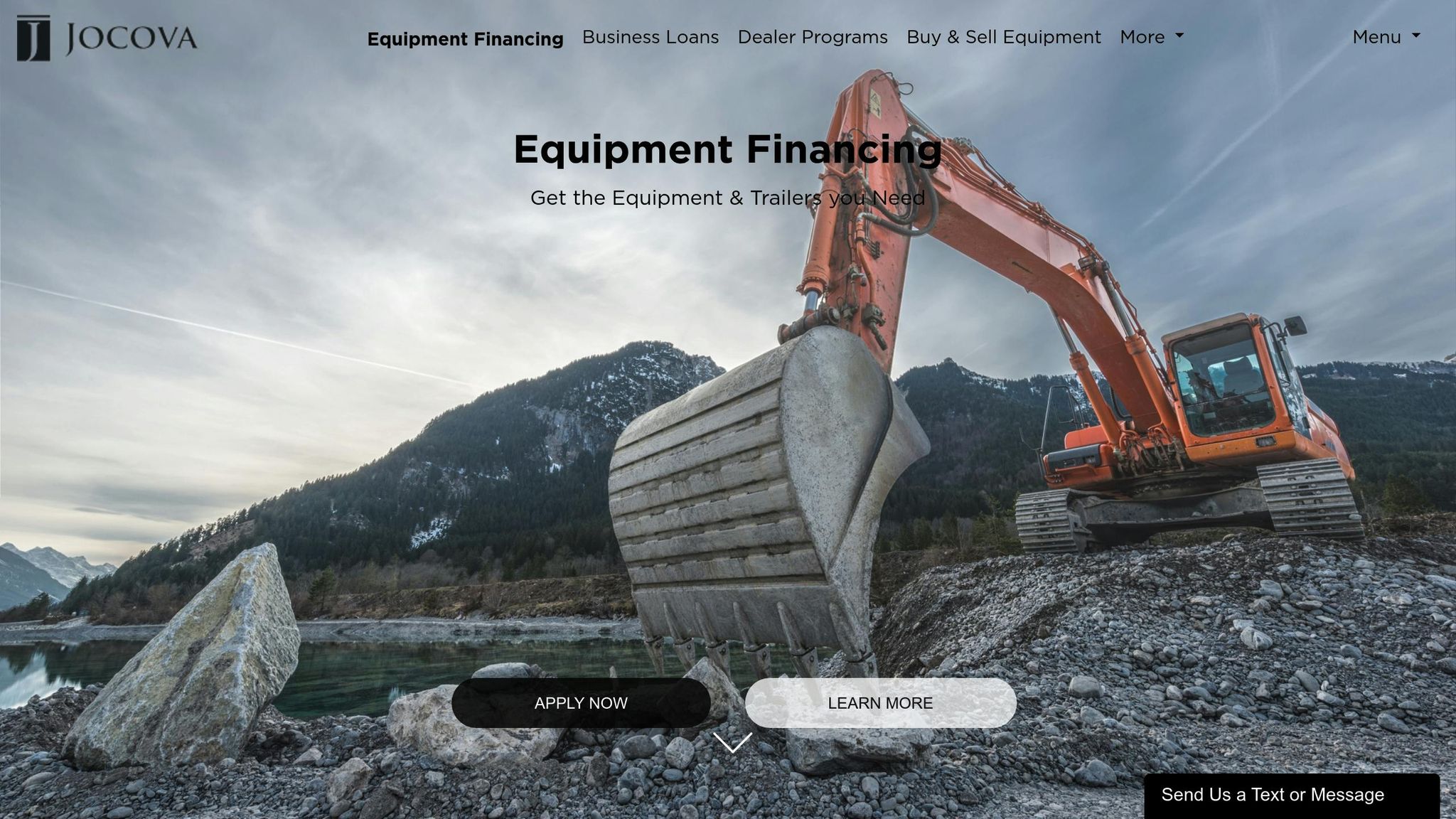
Jocova Financial has been helping Canadian businesses secure the equipment they need since 2007. By offering financing solutions tailored specifically for Canadian companies, they’ve made it easier for businesses to access funding – even those that may not meet traditional lending criteria. Their approach simplifies the process, ensuring businesses can focus on growth without unnecessary financial hurdles.
Equipment Financing and Leasing Options
Jocova Financial provides flexible financing and leasing options for both new and used equipment, catering to a variety of industries. Whether you’re looking for construction equipment, trailers, tools, compressors, or even software, they’ve got you covered. Their fast approval process and straightforward terms eliminate the hassle of complex paperwork and lengthy waiting times. Plus, you can source your equipment from dealers, manufacturers, or private sellers, all while preserving your cash flow with affordable monthly payments. This means you can start generating revenue immediately. Their streamlined approach also extends to specialized programs for dealers and manufacturers.
Financing Programs for Dealers and Manufacturers
For dealers and manufacturers, Jocova Financial offers programs designed to boost equipment sales while making financing more accessible for Canadian businesses. These programs feature competitive rates and high approval rates, accommodating businesses at all stages. With perks like rates as low as 0%, no-payment periods, and seasonal payment plans, they make it easier for small businesses to secure favourable terms. Applications are processed quickly, and credit reviews are thorough, improving the likelihood of approval. Payment terms can go up to 72 months, giving businesses the flexibility to align payments with their unique cash flow needs – a huge benefit for seasonal operations or those with variable revenues.
Digital Tools for Easy Financing Management
Jocova Financial also integrates digital tools to make managing financing agreements simple and efficient. Their online application system allows you to get pre-approved in as little as two minutes. Beyond applying, you can track your application status, access financing details, and manage agreements through their web-based tools. This reduces the need for traditional paperwork and phone calls. These digital tools also enhance the pre-approval process, giving you a clear picture of your financing capacity before you start shopping. This can help you negotiate better deals and streamline your purchasing decisions.
Growing Your Small Business with Equipment Financing
Equipment financing can be a game-changer for Canadian small businesses, offering a way to grow without draining cash reserves. By combining a smooth financing process with thoughtful planning, you can turn equipment investments into meaningful business growth.
Start by identifying the equipment your business needs – not just for today, but also to support future expansion. This planning complements the steps outlined earlier for financing applications, ensuring a smooth transition from purchase to growth management.
To strengthen your application, gather key documents such as updated financial statements, cash flow forecasts for the next 2–3 years, a detailed business plan that highlights your model, target audience, and growth strategy, along with vendor quotes to show your commitment.
For additional support, consider the Canada Small Business Financing Program (CSBFP). This program can partially guarantee loans – up to 85% – making lenders more inclined to approve equipment financing for eligible small businesses. It can also help you secure better loan terms, giving you a financial edge.
When comparing financing options, look at the total cost, the percentage financed, repayment schedules, and any additional fees. For businesses with seasonal revenue fluctuations, payment plans tailored to your cash flow can be especially helpful.
Don’t forget to account for costs beyond the equipment itself. Set aside an extra 25–30% of the equipment’s value to cover expenses like transportation, installation, maintenance, and training.
Once your financing is secured, managing the loan effectively is key. Regular maintenance will keep your equipment in good shape, extending its lifespan and preserving its value. Also, track depreciation closely, as it impacts your balance sheet and could influence future financing opportunities. These management practices not only support your current operations but also lay the groundwork for sustained growth.
FAQs
How can equipment financing improve the financial health of my small business?
Equipment financing can be a smart way to support your small business’s financial health. Rather than draining your cash reserves with a large upfront payment for equipment, financing allows you to spread the cost over time. This approach helps you keep cash on hand for other critical business needs, like payroll, marketing, or inventory.
On top of that, financing adds assets to your balance sheet while keeping liabilities manageable. This can boost your liquidity and make your business more appealing to lenders, giving you better access to funding when growth opportunities arise. With equipment financing, you can grow your business thoughtfully while staying on solid financial ground.
What should I consider when deciding between financing equipment or purchasing it outright?
When weighing the choice between financing equipment or buying it outright in Canada, you’ll want to consider factors like cash flow, tax planning, and overall costs over time.
Opting for financing lets you spread payments over time, which helps keep cash available for other business priorities. Plus, there may be tax perks, like being able to deduct interest expenses. On the flip side, purchasing equipment outright means no ongoing financing costs and immediate full ownership – an appealing option for assets with a long lifespan.
Think about your budget, how quickly the equipment will start generating returns, and whether keeping cash on hand for other opportunities is essential. Both options have their benefits, so the right choice depends on what fits your business’s financial plans and operational needs best.
Other Posts