Best Equipment Financing Options in Canada

Finding the right equipment financing is key for Canadian small businesses. Whether you’re looking to spread out costs, preserve cash flow, or upgrade equipment, there are four main options to consider: Jocova Financial, bank loans, private leasing and loan companies, and online lenders. Each has unique benefits and challenges, so understanding them is crucial for […]
, August 8, 2025
Finding the right equipment financing is key for Canadian small businesses. Whether you’re looking to spread out costs, preserve cash flow, or upgrade equipment, there are four main options to consider: Jocova Financial, bank loans, private leasing and loan companies, and online lenders. Each has unique benefits and challenges, so understanding them is crucial for making the right choice.
- Jocova Financial: Fast approvals, flexible payment terms, and tailored programs for small businesses, including manufacturer programs.
- Bank Loans: Lower interest rates but strict requirements, long approval times, and fixed repayment terms along with security and personal guarantees.
- Leasing: Lower upfront costs, flexible payments, and easier upgrades, but no ownership and higher long-term costs.
- Online Lenders: Quick approvals and flexible repayments, but higher interest rates, lower dollar amounts, and shorter terms.
Quick Comparison:
| Financing Option | Approval Speed | Interest Rates | Payment Terms | Ownership |
|---|---|---|---|---|
| Jocova Financial | Same-day | Moderate | Flexible (up to 72 months) | Yes |
| Bank Loans | 4–8 weeks | Lower (4%–7%) | Fixed | Yes |
| Leasing | Fast | Higher (6%–16%) | Flexible | No |
| Online Lenders | Within 24 hours | Higher (8%–15%+) | Flexible | Yes |
Your choice depends on your business needs, financial health, and urgency. Keep reading for a deeper dive into each option and tips to make the best decision.
Unlocking Growth Through Equipment Financing – Michael Fox
1. Jocova Financial
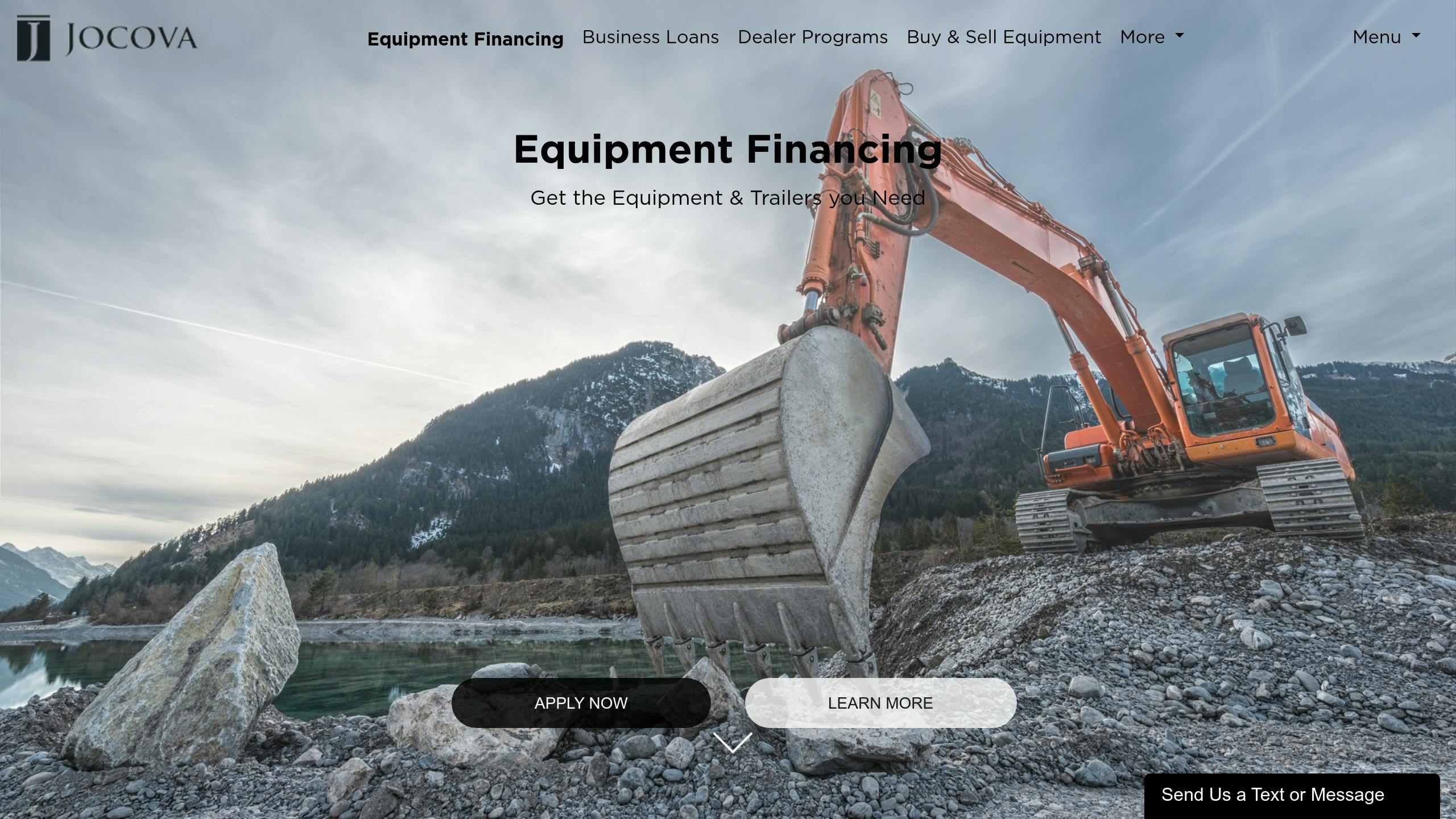
Jocova Financial provides equipment financing specifically designed for Canadian small businesses. Their goal is to make financing straightforward and accessible, offering solutions tailored to the unique needs of the Canadian market.
Eligibility Requirements
Jocova Financial simplifies the approval process by requiring minimal paperwork and moving towards a full digital experience. Instead of always relying on credit criteria, they also factor in on the potential of your business. This is particularly helpful for newer businesses.
This approach ensures that even if your business is just getting off the ground, you still have access to financing options. Rather than being tied to strict credit rules, the emphasis is on understanding your business’s goals and equipment needs. This inclusive approach also supports a faster approval process.
Approval Speed
With a 2-minute application and same-day approval for small-ticket transactions, Jocova Financial ensures you won’t miss out on critical opportunities. Whether you’re replacing equipment or jumping on a time-sensitive deal, their quick turnaround helps keep your business running smoothly without delays.
Flexibility of Payment Terms
Jocova Financial stands out with payment terms that can stretch up to 72 or in some cases even 84 months. They also offer seasonal and deferred payment options, making their plans especially appealing to businesses with seasonal revenue cycles. For example, landscaping companies that thrive in the summer or retailers during the holiday season can benefit from this flexibility, aligning payments with their busiest periods.
Overall Cost
The company’s financing structure is designed to help businesses manage the total cost of equipment ownership. By offering low monthly payments, they aim to protect your cash flow, spreading equipment expenses over a manageable timeframe. Instead of forcing businesses into rigid payment structures, Jocova Financial provides customised plans that fit your financial situation and equipment needs. This flexibility can help reduce the strain on your daily operations while keeping long-term costs under control.
2. Traditional Bank Loans
Traditional banks, like RBC, TD Bank, and Scotiabank, have long been a key source of business financing in Canada. They offer equipment loans, but getting approved can be tough. Unlike Jocova Financial’s simplified process, traditional banks stick to a more stringent approach which can require payment meetings in person as well as years worth of financials and supporting documentation.
Eligibility Requirements
Banks have high standards for loan approvals, with about 72% of small business loan applications being declined. To even be considered, you’ll typically need a credit score of 650 or higher. Beyond that, lenders look for strong personal and business credit scores, a personal guarantee, collateral, and solid financials. They’ll also evaluate factors like how long you’ve been in business, your revenue, and your overall credit profile.
“Bankers need numbers.”
– Concetta Farina, Account Manager, Virtual Business Centre, BDC
Be prepared to provide detailed documentation, such as tax returns, financial statements, proof of collateral, and a comprehensive business plan. It’s also essential to review your credit reports for errors and ensure your financial records are accurate and up to date. If your business is incorporated, confirm that your registration is active and current.
Approval Speed
Patience is key when dealing with traditional banks. The approval process can take anywhere from four to eight weeks, and in some cases, it might stretch to three months. This delay is due to their thorough review of your financial statements, which helps them evaluate your company’s financial health, profitability, and ability to repay the loan. While this careful assessment has its benefits, it can be frustrating if you need equipment quickly or want to seize time-sensitive opportunities.
Flexibility of Payment Terms
Banks generally offer fixed monthly repayment schedules, which can make budgeting simpler. However, these terms are often rigid, lacking options like seasonal or deferred payments that might better suit some businesses.
“Don’t focus only on interest rates. Consider factors like the percentage of your purchase that different institutions will finance, the repayment schedule and the collateral you are willing to offer.”
– Concetta Farina, Account Manager, Virtual Business Centre, BDC
Typically, banks finance between 70% and 90% of the equipment’s value, leaving you to cover the remaining cost upfront.
Overall Cost
One of the advantages of traditional bank loans is their lower interest rates compared to other financing options. However, it’s important to remember that the total cost of borrowing includes more than just the interest rate. The loan term plays a big role in determining how much you’ll pay overall.
For instance, a $15,000 loan with a 7.75% APR would cost:
- $21,602.40 over 10 years, with monthly payments of $180.02
- $18,141.00 over five years, with monthly payments of $302.35
- $16,859.52 over three years, with monthly payments of $468.32
Additional expenses, like origination fees, annual fees, and prepayment penalties, can also add up. To keep costs manageable, compare APRs carefully, borrow only what you can afford to repay, and choose a loan term that balances affordable monthly payments with a reasonable total cost.
“Keep your cash in your business for emergencies.”
– John Elliott, Jocova Financial
If you have a strong credit score, you’ll likely qualify for lower APRs, which can reduce both your monthly payments and the overall cost of the loan. Since banks prioritize creditworthiness, maintaining good personal and business credit is crucial for getting approved and securing favourable terms.
3. Leasing Solutions
For Canadian small businesses, equipment leasing offers a practical alternative to traditional financing. It often comes with lower upfront costs and more flexibility. Instead of purchasing equipment outright or relying on a bank loan, leasing allows businesses to use the equipment while making regular payments – without the commitment of full ownership. Below, we’ll break down key factors like eligibility, approval speed, payment flexibility, and overall cost to help you understand how leasing can work for your business.
Eligibility Requirements
To qualify for equipment leasing, lenders typically look at factors such as your credit history, revenue, cash flow, and how long your business has been operating. While most providers prefer businesses with at least two years of operation, startups may still qualify by offering a personal guarantee or a larger down payment. You’ll also need to be a registered Canadian business with a valid business number and a clear plan for how the equipment will be used.
Be ready to provide documentation like income statements, balance sheets, bank statements, business registration details, licences, and tax returns. If your credit score is on the lower side, you may still secure leasing options, but likely with less favourable terms. In such cases, focusing on leasing lower-cost equipment with strong resale value can help reduce the lender’s risk.
Approval Speed
One of the standout advantages of leasing is the speed of approval compared to traditional bank financing. Leasing providers streamline the process with less paperwork and fewer bureaucratic steps. This makes it easier to secure an agreement quickly – especially helpful if you need equipment urgently or want to act on a time-sensitive opportunity.
Flexibility of Payment Terms
Leasing is known for its flexible payment structures. For example, companies like Jocova Financial offer options that reduce the initial financial burden. Unlike traditional bank loans with fixed monthly payments, leasing agreements can be customized to align with your business’s cash flow. Payment schedules can be monthly, seasonal, semi-annual, or even annual, depending on your revenue patterns. For businesses looking for predictable costs, Equipment Financing Agreements (EFAs) offer fixed payments over a set term. Many lenders also provide tailored options to suit specific industries.
Overall Cost
When evaluating leasing, it’s essential to consider the full cost, not just the monthly payments. Lease rates in Canada typically range from 6% to 16%, influenced by factors such as:
- The type and condition of the equipment
- Length of the lease term
- Your credit profile
- The financial health and age of your business
- Current market conditions
- The type of lease you choose
Here’s a quick breakdown of typical rate ranges in Canada which various based on business type, credit, amount, and industry, credit:
| Business Credit | Typical Rate Range |
|---|---|
| Excellent | 6% – 12% |
| Good | 9% – 16% |
| Fair/Challenged | 12% – 21%+ |
For leases under $100,000, businesses with good credit often secure rates between 7% and 9%. Those with excellent credit might achieve rates as low as 5%, while businesses with credit challenges or less competitive lenders may see rates in the 9% to 13% range. Keep in mind, longer lease terms can lower your monthly payments but increase the total cost over time.
Lease rates are generally negotiable in Canada. While they may be higher than traditional loan interest rates, leasing agreements often include added benefits and services. Plus, lease payments can typically be written off as a business expense, reducing your taxable income. To keep leasing costs down, consider these tips:
- Work on improving your credit before applying.
- Explore various lease terms and payment structures.
- Prepare a strong business file that highlights your financial stability.
- Shop around for offers that best fit your needs.
- Review lease agreements carefully, paying attention to taxes, interest rates, buyout fees, and any extra services included.
4. Alternative Online Lenders
Online lenders are stepping up with tech-powered, fast financing solutions designed to meet the changing needs of businesses. In fact, 61% of Canadian small businesses are now looking for funding options beyond traditional banks.
Eligibility Requirements
To qualify for financing from alternative online lenders, businesses generally need a solid track record and good credit history. However, the specifics can vary depending on the type of loan, how long the business has been operating, and the industry it belongs to. Typically, your business must be based in Canada, have been generating revenue for at least 24 months, and show consistent profitability. A good credit score is also a must.
The documentation process is straightforward but thorough. You’ll usually need to provide business registration or incorporation papers, recent tax returns with notices of assessment, and up-to-date financial statements. These lenders aim to simplify the process while maintaining essential checks to ensure reliability.
Approval Speed
Speed is a major advantage with online lenders. Thanks to advanced algorithms, they can process applications and provide decisions in as little as 24 hours. For example, some promises to evaluate applications and deliver a decision within minutes; realtime, with approvals often completed in the same timeframe.
/
Flexibility of Payment Terms
One of the standout features of online lenders is their flexible repayment options, which are especially helpful for businesses dealing with fluctuating cash flows. Unlike traditional loans, these options often let businesses adjust repayment dates, modify payment schedules, or even take payment breaks when necessary.
Overall Cost
While interest rates with online lenders can be higher than those of traditional banks, many businesses find the speed, convenience, and flexibility worth the extra cost. To manage expenses, it’s worth asking about prepayment options, which can help reduce total interest. When weighing the costs, consider the benefits of quick approvals, reduced administrative work, and the potential for increased revenue.
Advantages and Disadvantages
Choosing the right financing option means weighing the pros and cons to align with your business objectives. Below is a table summarizing the key benefits and drawbacks of each option, followed by additional insights to help refine your decision.
| Financing Option | Advantages | Disadvantages |
|---|---|---|
| Jocova Financial | • Preserves capital for other business needs • Spreads costs over time • Predictable payments for steady cash flow • High approval rates (nearly 90%) • Flexible equipment upgrade options |
– Typically fixed term. |
| Traditional Bank Loans | • Lower interest rates (typically 4% to 7% for qualified borrowers) • Immediate ownership of equipment • Trusted networks • Tax benefits (depreciation and interest deductions) • Larger loan amounts available |
• Strict requirements, including strong credit history and extensive documentation • Slower approval process • Collateral requirements • Rigid repayment terms |
| Leasing Solutions | • Minimal or no upfront costs • Flexibility to upgrade to newer technology • Tax advantages through deductible lease payments |
• No ownership of the equipment • Higher long-term costs compared to purchasing |
| Alternative Online Lenders | • Fast approval (decisions within 24 hours) • Lenient credit requirements • Easy application process • High accessibility with approval rates over 90% |
• Higher interest rates (typically 8% to 15% or more) • Shorter repayment terms |
Conclusion
When considering equipment financing, it’s important to align your choices with your business’s specific needs and long-term objectives.
Start by examining the type of equipment you need, its expected lifespan, and how it will contribute to your business growth. Take a close look at your financial health to determine which financing options make the most sense for your situation. Once you’ve defined your equipment needs, ensure your financial position supports your decision.
Be prepared with key financial documents, and don’t forget to account for additional costs such as transportation, installation, maintenance, and training. These extra expenses can add up to 25–30% of the equipment’s total value.
From there, review the terms of different financing options, compare offers, and negotiate terms that align with your cash flow – especially if your business is affected by seasonal fluctuations.
Choose financing solutions that protect your working capital while supporting your growth. Make sure the terms are clear and suited to your operational and financial requirements.
FAQs
How can small businesses in Canada choose the right equipment financing option for their needs?
To find the best equipment financing option, small businesses in Canada should begin by taking a close look at their financial health. This means assessing cash flow, credit scores, and the stability of revenue. A clear understanding of these factors will help determine what financing terms are realistic and manageable.
Next, think about the equipment itself. What’s the cost? How long will it last? And most importantly, how will it contribute to your business operations? These are key questions to answer before moving forward.
When comparing financing options, pay attention to details like interest rates, repayment periods, and loan-to-value ratios. It’s also crucial to review eligibility requirements to ensure they match your business’s financial situation. For Canadian businesses, government-backed financing programs can be a great resource, offering terms that are often more accessible.
By carefully weighing these elements, you can choose a financing option that aligns with your immediate needs while supporting your long-term goals.
Jocova Financial: A Simpler Path to Equipment Financing
Jocova Financial makes equipment financing easy and accessible, offering lease-to-own options starting at just $1,500. Unlike traditional lenders, their requirements are more relaxed, focusing on basic qualifications to help small businesses get the tools they need without unnecessary red tape or delays.
In contrast, traditional banks often have tougher requirements. These typically include a strong credit score – usually 650 or higher – collateral, and an in-depth financial analysis. Plus, the approval process at a bank can drag on for one to three months, making it a less-than-ideal option for businesses needing quick access to equipment.
Jocova Financial is tailored for Canadian entrepreneurs, offering faster approvals and fewer hurdles. It’s a practical solution for small businesses looking to streamline cash flow and expand their operations efficiently.
Photo Credit: Photo by krakenimages on Unsplash
Other Posts